How to Choose a Fountain Pen for Journaling
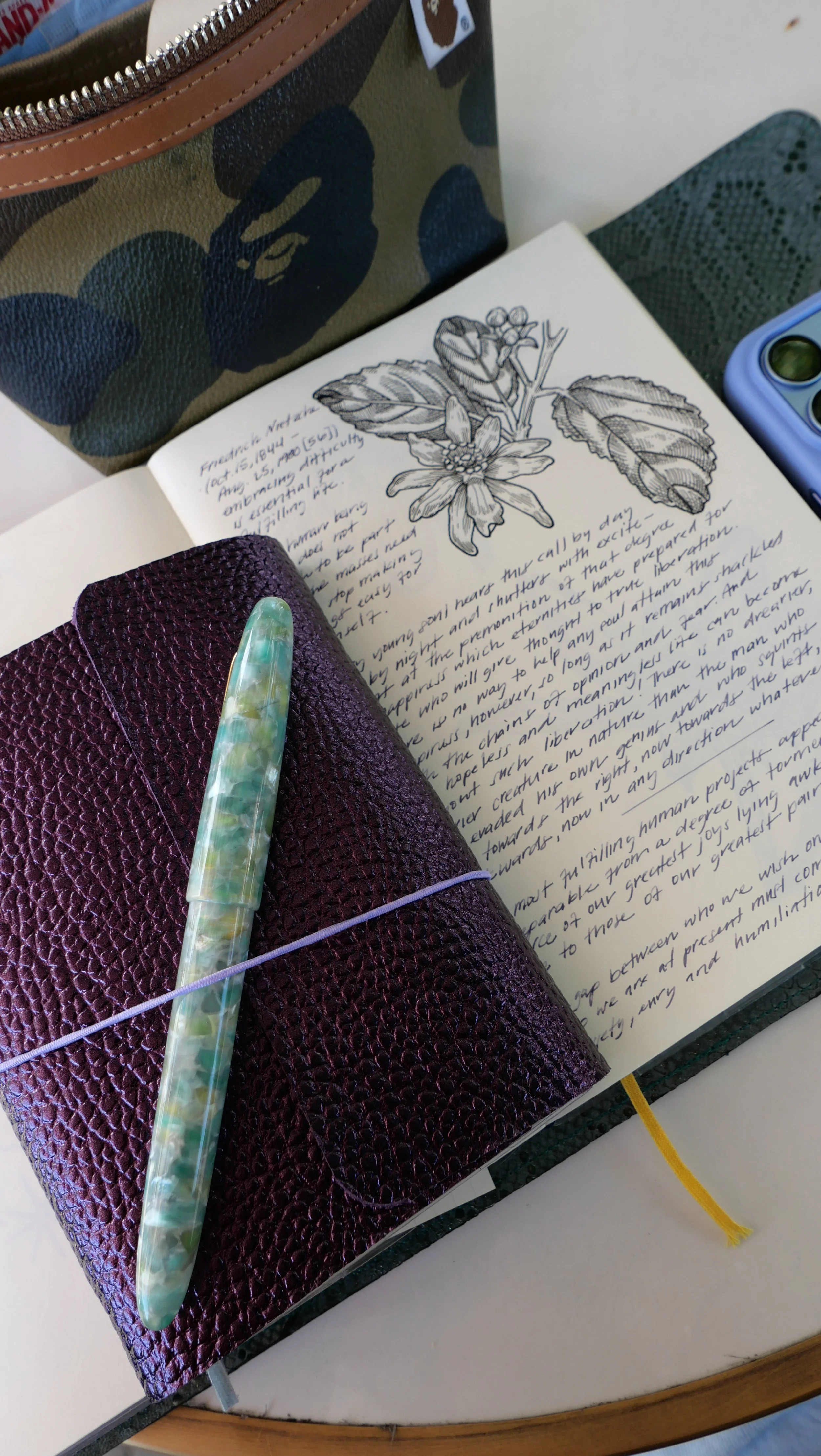
If you're thinking about getting a fountain pen for journaling, there's one thing I'd recommend before buying anything:
Don't start with the pen. Start with how you write.
It's very easy to fall down the fountain pen rabbit hole. You start looking at nib sizes, inks, converters, filling systems, paper, brands... and suddenly you have seventeen tabs open and no idea which pen you actually need.
I've been there.
The good news is that choosing a fountain pen for journaling doesn't have to be complicated. There are a few things I'd consider first.
1. Start with the nib size
The first thing I'd think about is how you actually write. If you have small handwriting or you're writing in something compact like a Hobonichi Weeks, I'd start with a fine or extra-fine nib. If you have larger handwriting or like a more expressive line, a medium or broad nib might feel better.
I tend to reach for finer nibs when I'm writing in my planner because I don't have a lot of space to work with. For morning pages or a larger journal, there's a little more room to play.
There's no universally "best" nib size. It's really about how much space you have and how you like your writing to look.
Your handwriting matters more than whatever nib size someone on the internet says is best.
2. Think about your paper
This is probably the thing I didn't pay enough attention to when I first got into fountain pens.
A pen can feel completely different depending on the paper you're using. Some papers show off shading and sheen beautifully, while others make certain inks feather or show through.
If you're using something like Tomoe River paper in a Hobonichi or MD paper, you have a lot of flexibility, but you'll still want to pay attention to how wet your pen and ink combination is. How to Choose the Right Journal or Sketchbook→
A few things to look out for:
Feathering: when the ink spreads beyond the line
Bleed-through: when ink actually comes through the paper
Show-through: when you can see your writing from the other side
Dry time: how long the ink takes to stop being smudgy
This is why I don't think there's one universal "best fountain pen."
It's really about finding a combination of pen + ink + paper that works for you.
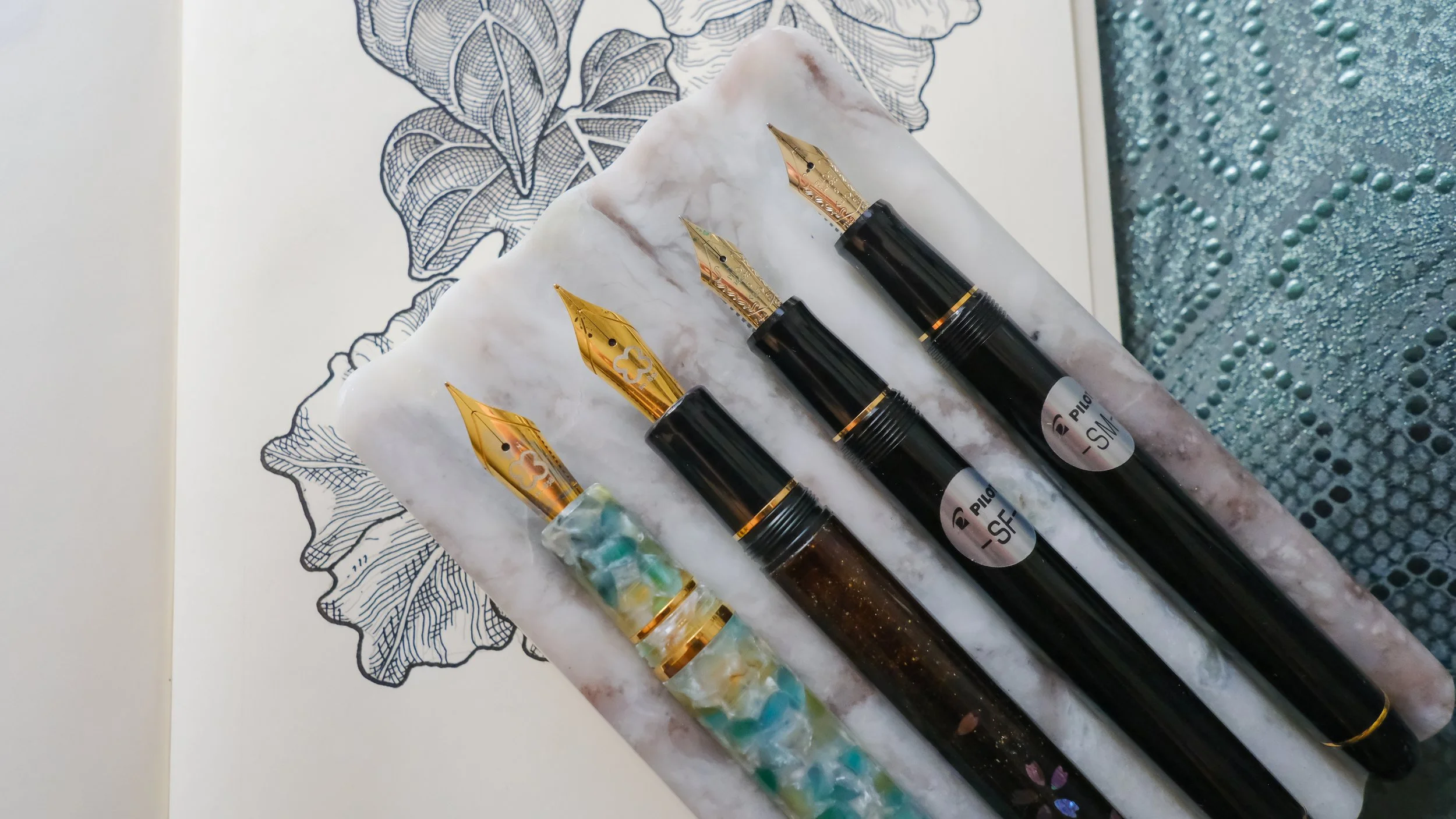
3. Decide what you actually want from the pen
This is probably the most personal part. Do you want something that disappears into your routine? Something pretty that you enjoy picking up? A pen you can draw with as well as write with?
Those are all different priorities.
For me, that's part of the fun of fountain pens. I'm not just looking for something that puts ink on paper. I want the tool itself to make me want to use it. If you're not sure where you fall, here's where I'd start:
| If you want... | Look for... |
|---|---|
| Small planner writing | Fine or extra-fine nib |
| Everyday journaling | Fine or medium nib |
| Expressive writing | Soft-fine, soft medium, custom grind |
| Drawing | Extra fine, fine, or fude |
What about a beginner fountain pen?
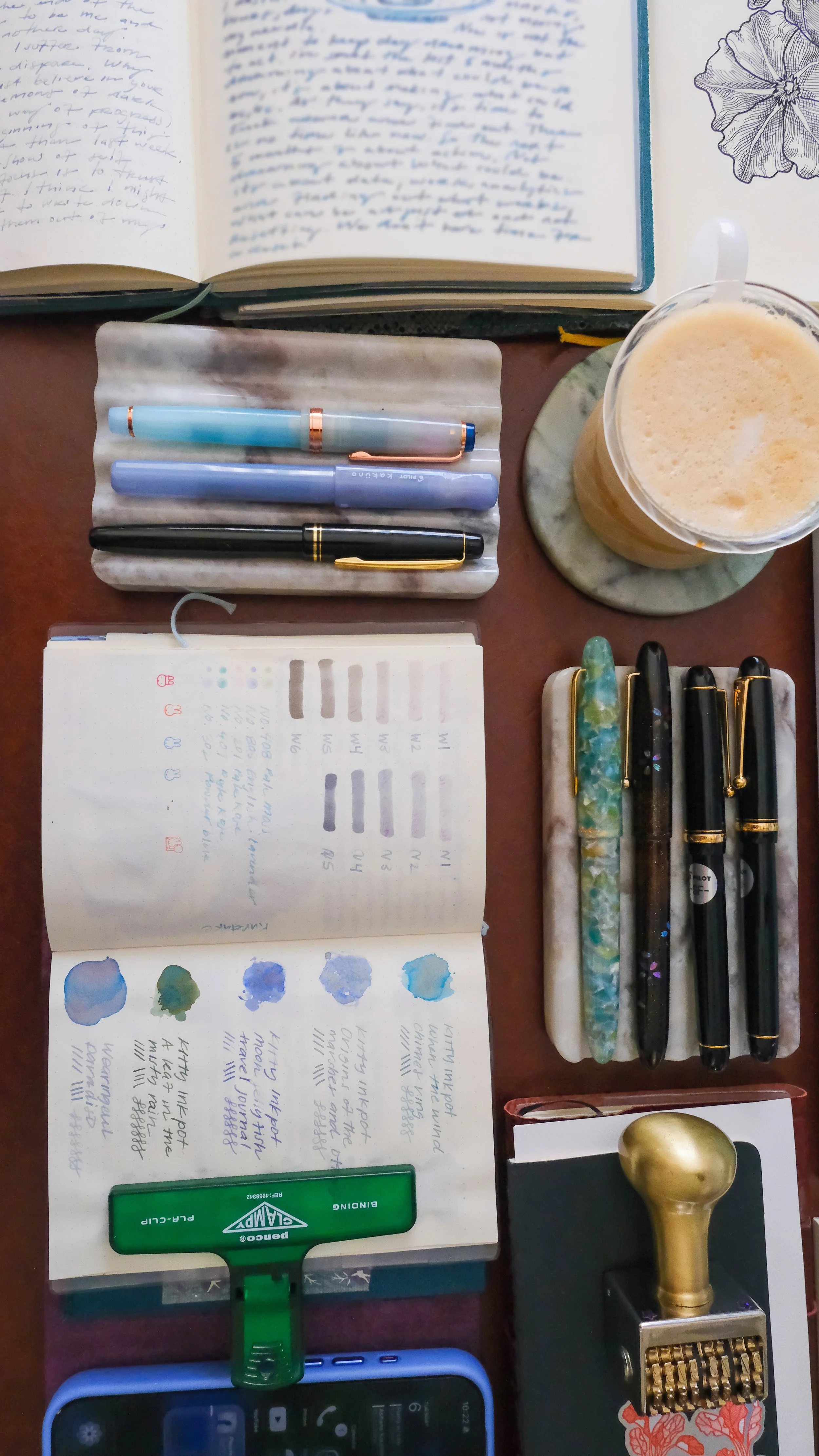
If you've never used a fountain pen before, you absolutely don't need to start with an expensive one. My first fountain pen was a Pilot Kaküno. It's inexpensive, straightforward, and doesn't require you to understand the entire fountain pen ecosystem before you can start writing. Curious about the Pilot Kaküno? I put together a full review of this beginner-friendly fountain pen, including what I like about it and who I think it's best for.
Once you know what you like, then it becomes much more fun to experiment and explore price ranges, models and more.
A few fountain pens I've actually used
Once you have a better idea of what you're looking for, individual pen reviews become much more useful.
Here are a few foutain pens I've spent time using:
Pilot Kaküno: A great place to start if you're completely new to fountain pens. Here’s my Pilot Kakuno review →
Jinhao 82: An inexpensive option if you want to experiment without spending much. Here’s my pilot Jinaho 82 review →
Esterbrook Estie / Niblet: A good option to look at if you're interested in a higher price point fountain pen. Here’s my Esterbrook model comparison →
I hope these tips and and just remember, you don't need the perfect fountain pen before you start journaling. You just need one that feels good in your hand and makes you want to put words on the page.