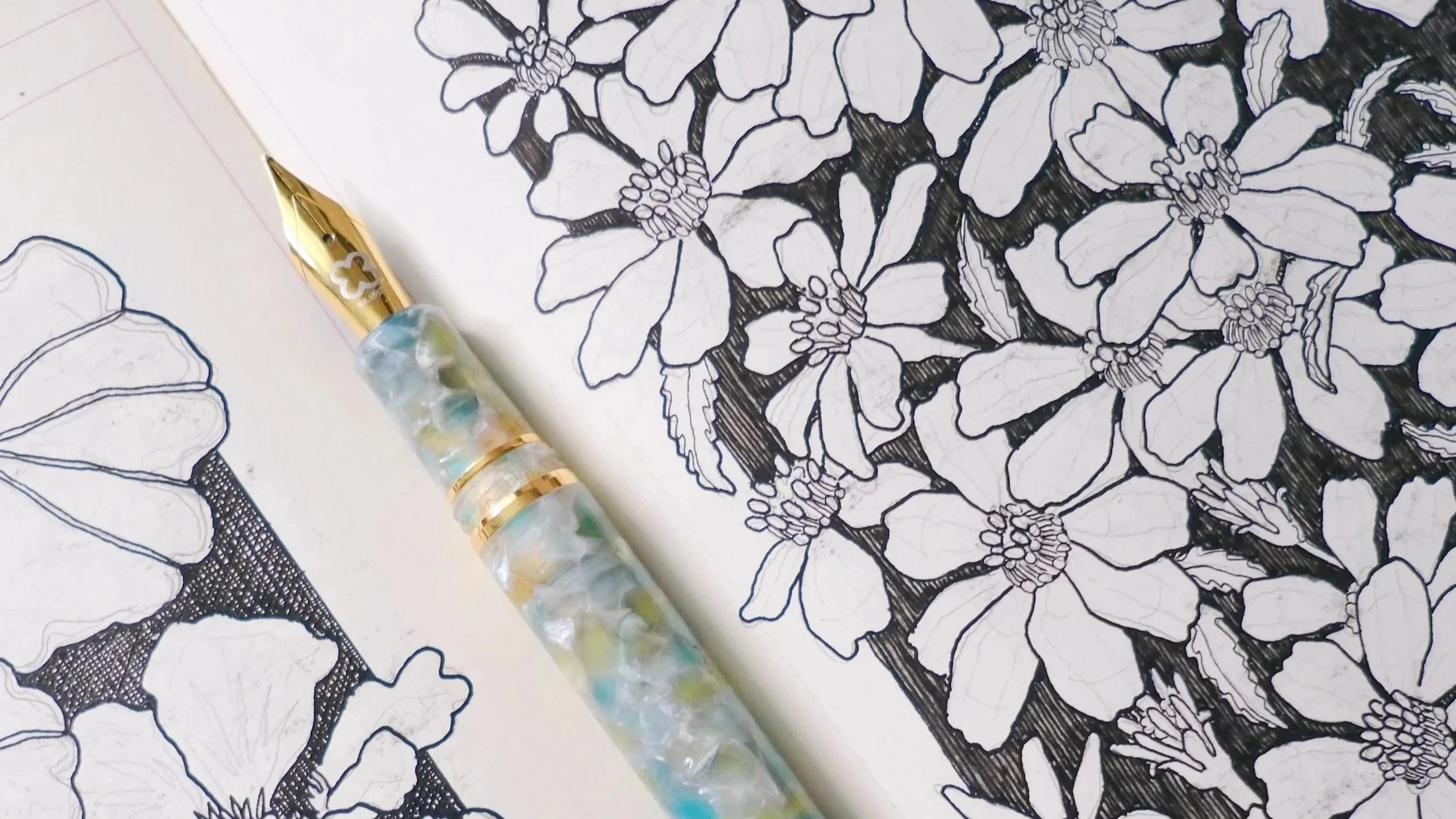
Esterbrook Estie Broad Nib Review
Back in art school, one lesson that always stuck with me was the importance of varying line widths. It's such a simple thing, but changing the weight of your lines can make a drawing feel more alive and give it a stronger presence on the page.
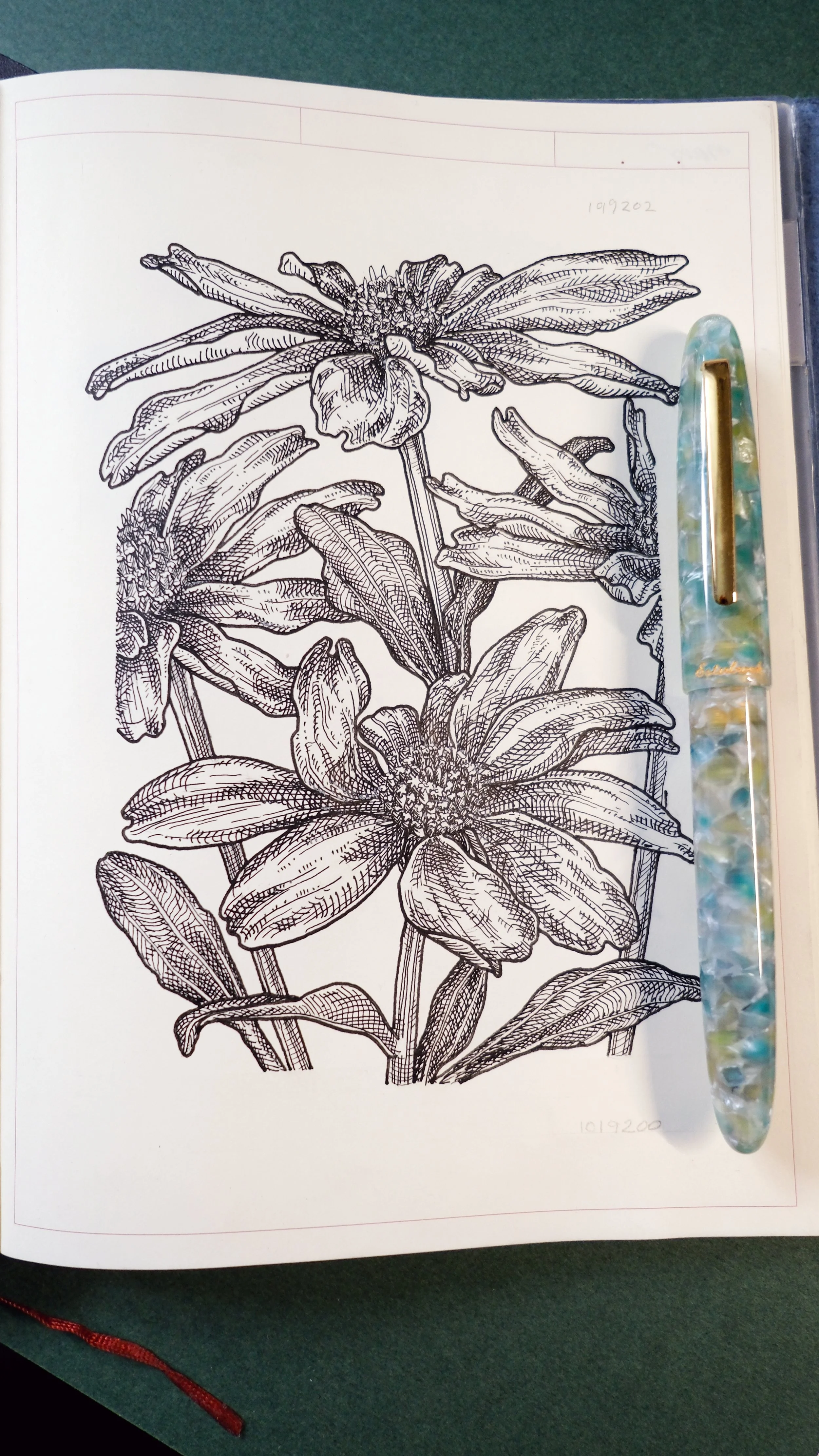
I've carried that lesson with me ever since, especially when drawing flowers. As much as I love my Pilot pens, the Kakuno only comes in sizes up to medium, and I'm not quite ready to make the jump to the Pilot Custom series. Since Japanese nibs tend to write on the finer side anyway, I knew I wanted a Western nib with a little more presence.
Since I already owned an Esterbrook Niblet and genuinely enjoyed drawing with it, the Esterbrook Estie felt like the obvious next step. Plus, let's be honest, I'm always happy to add another beautiful pen to the collection.
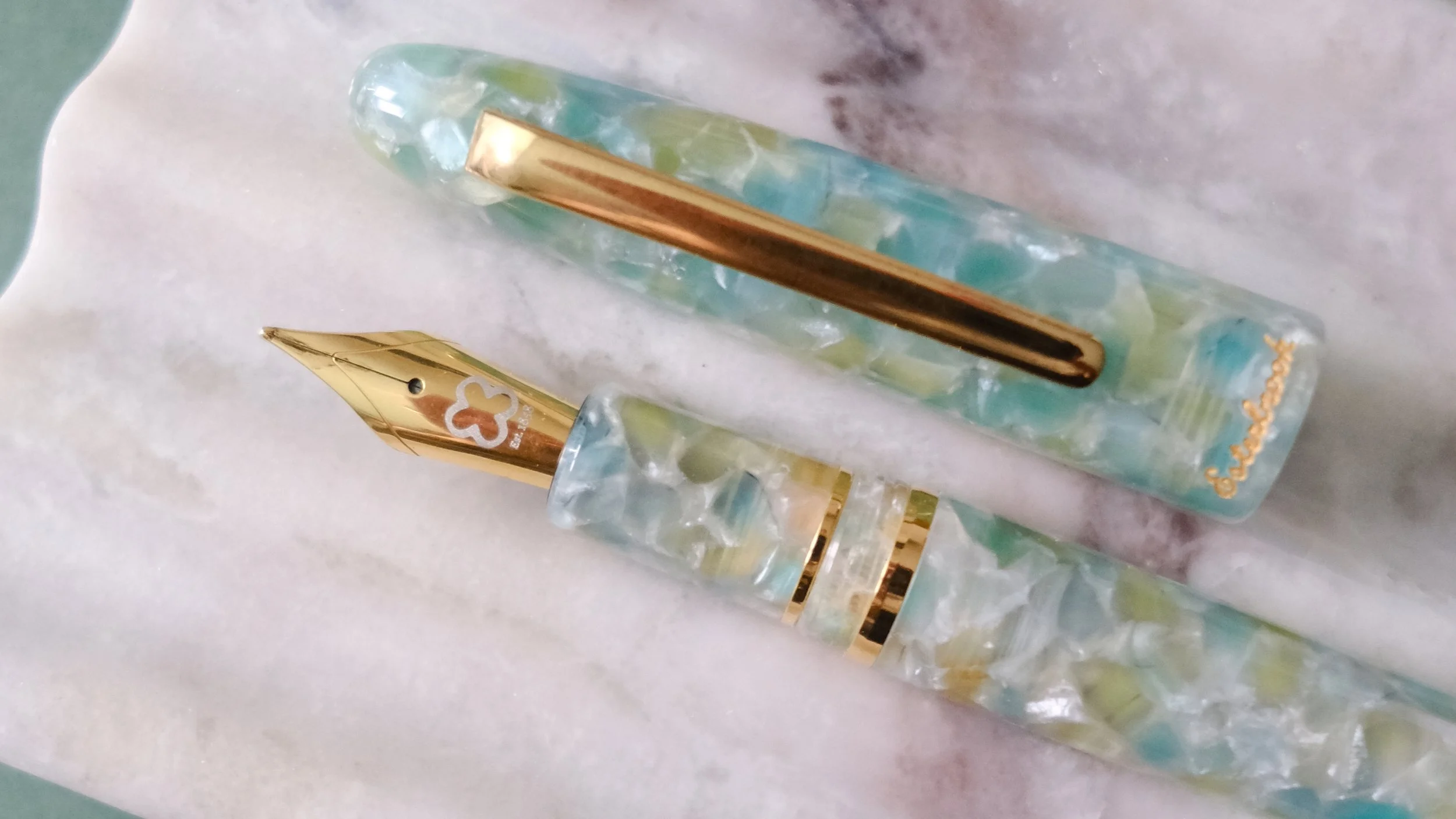
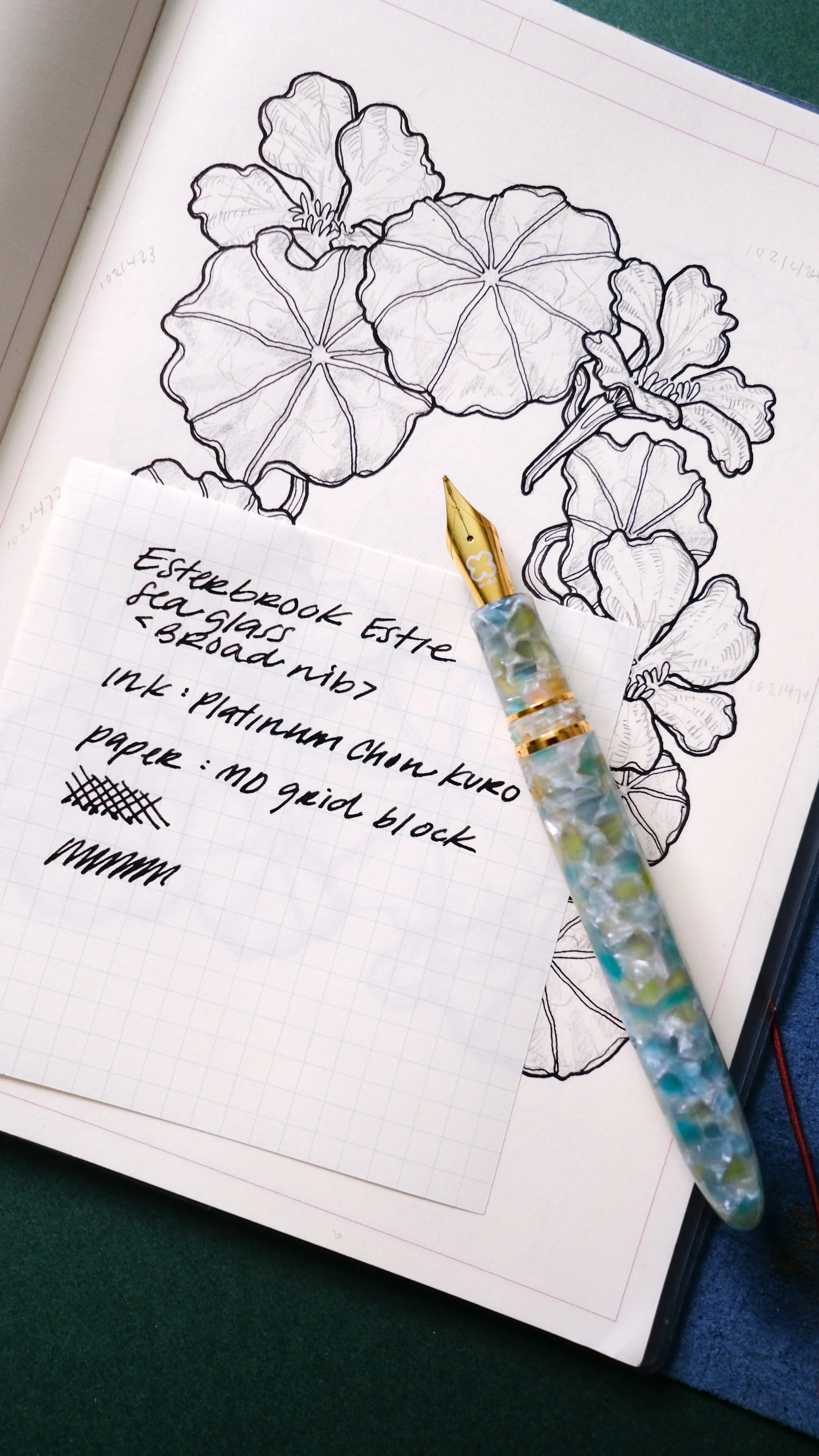
Esterbrook Estie Sea Glass Broad Nib
Cheat Sheet
Pen Color: Sea Glass
Nib: Jowo #6 nib Broad (0.55 mm)
Ink Used: Platinum Chou Kuro
Paper Tested: Midori MD
Filling System: Converter
Purchase Price: $144.60 | Ebay Auction
What Is the Esterbrook Estie?
If you're not familiar with Esterbrook, it's a pen company with roots dating back to 1858. The original company became known for its steel dip pens and was a staple for writers, artists, and students throughout much of the 20th century. Although the brand disappeared for several decades, it was revived in 2018 and has since become a favorite among fountain pen enthusiasts for blending vintage-inspired designs with modern materials and craftsmanship.
The Estie is Esterbrook's flagship fountain pen, drawing inspiration from the company's historic pens while offering the reliability of a modern writing instrument.
One of my favorite features is the acrylic resin body and wide nib options ranging from extra-fine to specialty grinds. The cap also seals well enough that I can leave the pen unused for days and still have it to draw with immediately when inspiration strikes.
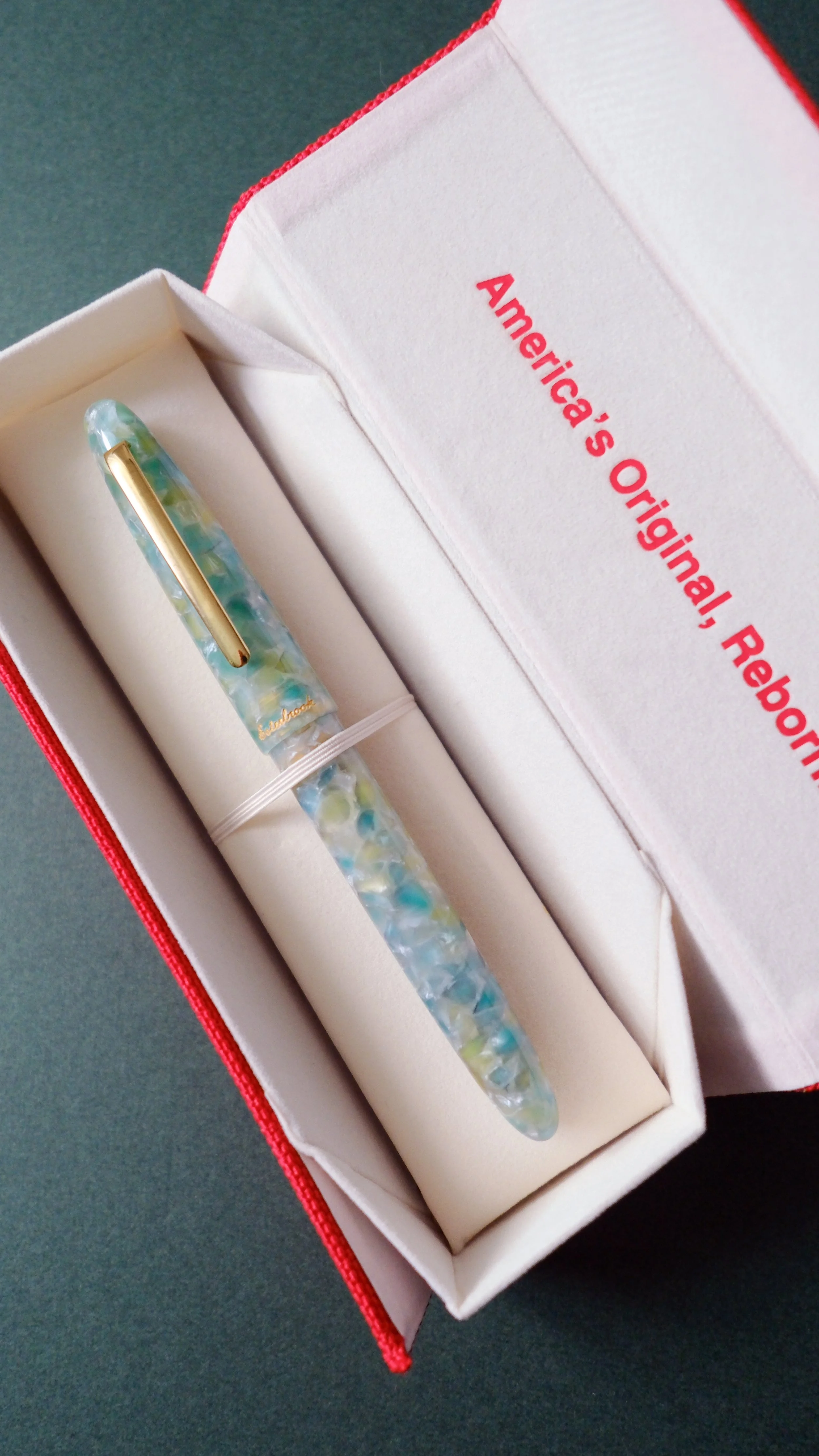
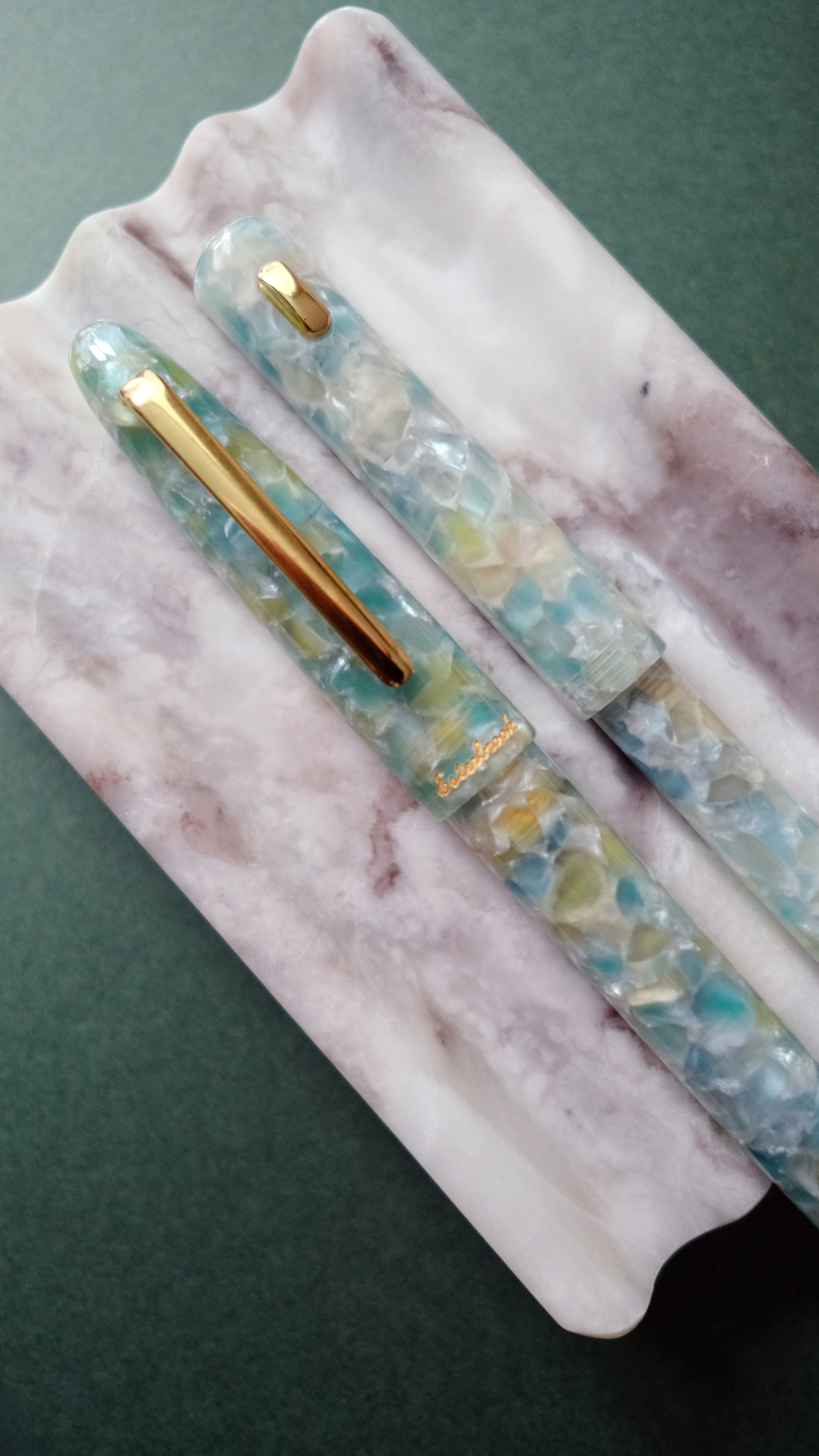
Drawing With the Esterbrook Estie Broad Nib
I purchased the broad nib specifically for drawing outlines. Most of my botanical work is done with extra-fine and fine nibs, but I wanted something that could create bold lines and add contrast to a piece.
My goal was simple: find a wet-writing fountain pen that could handle Platinum Chou Kuro without drying out. The Estie delivers exactly that. It has great flow and the broad nib is dynamic! It lays down a rich, saturated line with excellent ink flow, making it perfect for floral outlines and larger details.
Writing Experience
The first thing I noticed was how smooth the nib feels on paper.
The broad nib glides effortlessly across the page with generous ink flow and very little feedback. It's a wet writer, which makes it especially enjoyable for journaling, letter writing, and ink swatching.
Because it puts down more ink than finer nibs, paper choice matters. On fountain pen-friendly papers like Midori MD, the writing experience is excellent. I also use the pen unposted, which keeps it comfortable and balanced but you can post it if you like.
Is the Esterbrook Estie Worth It?
If you're buying your very first fountain pen, a broad nib probably isn't the most practical place to start since it’s a very thick line.
But if you already enjoy fountain pens and want a nib that showcases your inks or creates bold, expressive lines, the Esterbrook Estie broad nib is a wonderful choice.
For me, it's become a dedicated drawing tool. It gives my floral illustrations the thicker outlines I was looking for while still offering the smooth writing experience Esterbrook is known for.