How I Find Flow State in Just 30 Minutes
For a long time, I thought creativity required large blocks of uninterrupted time. I imagined that I'd draw more often if I had an entire afternoon free or a quiet weekend with nothing on my schedule. The reality is that those perfect conditions rarely appear.
Instead, I've found that creativity lives in the liminal spaces. Those random 15–30 minute pockets that usually get swallowed by doom scrolling can become an opportunity to lock in and find flow state.
If creativity keeps getting pushed to "later," it eventually stops happening altogether.
These are the habits I've built into my day that help me create consistently, even when I only have thirty minutes.
1. Clear Your Desk
Before I start drawing, I take a few minutes to clear my desk. I organize my pens in their holder and stack my journals. I'm not deep cleaning or reorganizing, I’m just removing anything unrelated to what I'm about to work on.
A typical desk reset for me includes:
Stacking loose paper
Moving unfinished projects out of sight
Clearing away random objects that accumulated throughout the day
Leaving only the tools I need for the current session
I've found that visual clutter creates mental clutter. When my desk is crowded, my mind feels crowded so a clear space helps me stay in flow state longer.
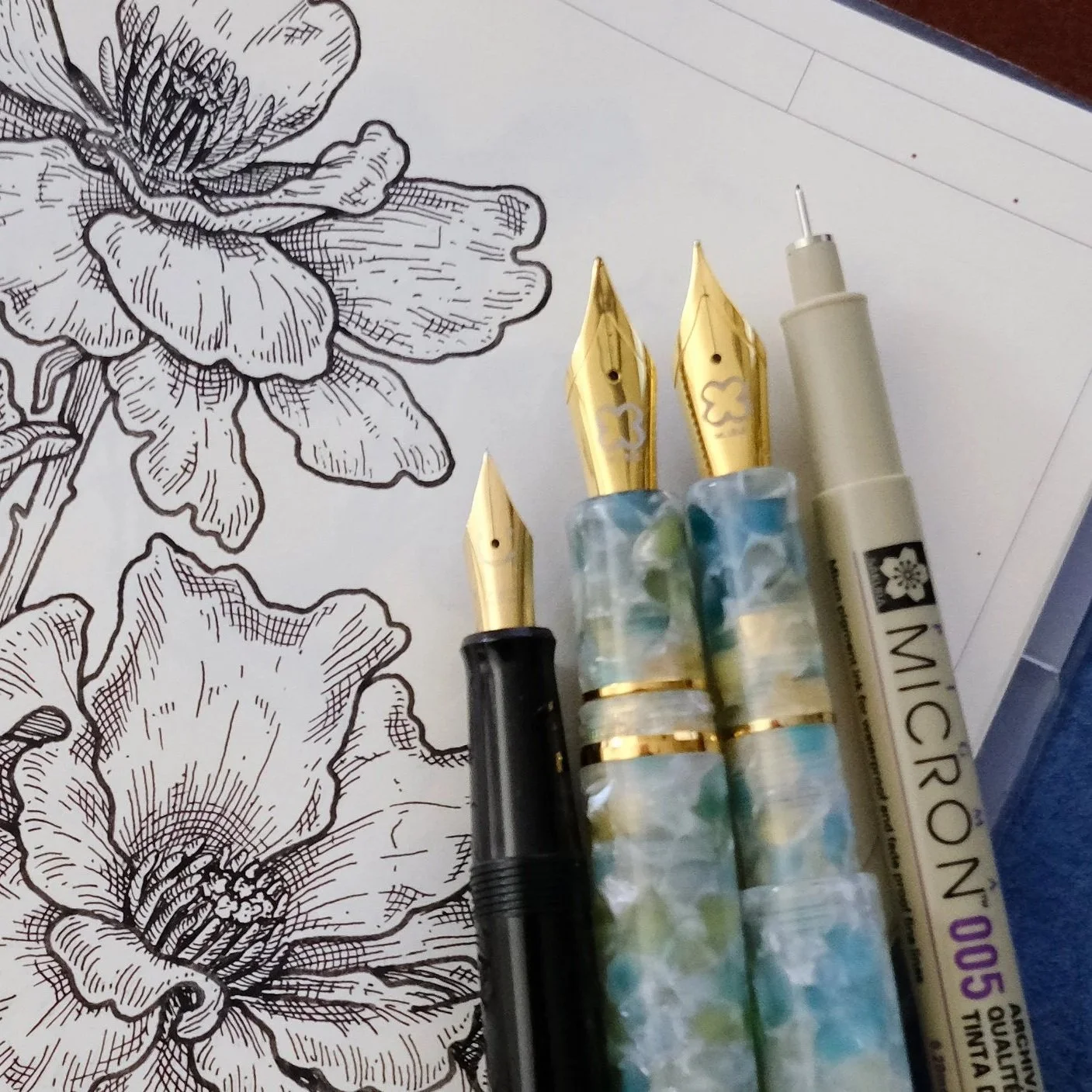
Tools That Help Me Get Into Flow State
The pens I use most often
Headphones for audiobooks
2. Put Your Phone Somewhere Inconvenient
If my phone is sitting next to me, I'll eventually pick it up. It doesn't matter how motivated I am to draw. The habit is simply too easy. Instead, I place my phone across the room or in another part of the apartment entirely.
The goal isn't discipline. The goal is creating enough friction that checking my phone becomes inconvenient and eventually an afterthought.
As a bonus, turning off notifications reallly helps. I've even disabled notifications for nearly all of my social media apps, and it's helped me reclaim a surprising amount of mental real estate. Fewer pings, no more badges means social media isn’t competing for my attention.
3. Set a 30-Minute Timer
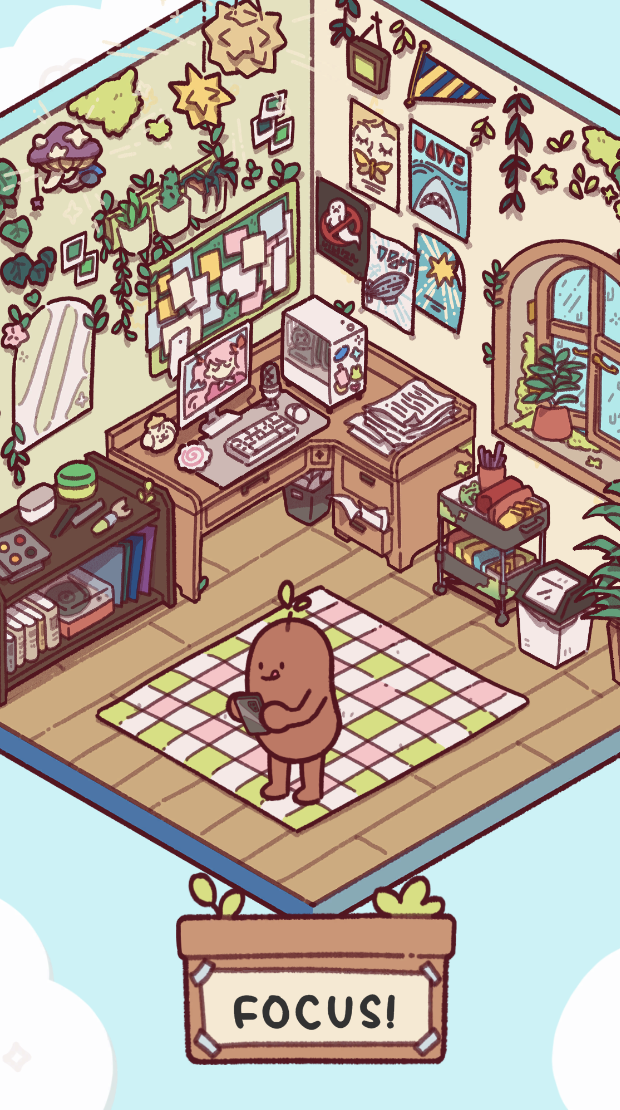
Recently I've been using Focus Friend, a cozy focus timer app created by Hank Green. While the timer runs, a cute little bean character sits and knits socks, which somehow makes focusing feel a little less serious and a little more fun.
It's essentially a Pomodoro timer with calm music and a gentle alarm. I started with 15-minute sessions and gradually increased my focus time as the habit became easier.
Sometimes I stop when the timer ends. Other times I increase the timer to an hour if ideas are really flowing.
If Focus Friend isn't your style, there are also physical Pomodoro timers that are cute and functional.
4. Listen to an Audiobook
When I need a little background company, I put on an audiobook. My favorite way to do this is through Libby using my local library card. It's one of the best free resources I've discovered, and it's opened up an endless collection of books that I probably wouldn't have purchased up otherwise.
Right now I'm listening to The Shining by Stephen King, the movie is one of my favorites so I thought it was about time to listen to the book. It’s nearly sixteen hours long, so it’s become the perfect companion for drawing sessions.
A few reasons I enjoy audiobooks while drawing:
They make routine sketching feel more immersive
They're less distracting than scrolling social media
They help me look forward to creative time
They turn a library card into an endless source of inspiration
Audiobooks give the restless part of my brain something to follow while my hands stay busy creating.
5. Lower the Bar
This might be the most important step of all. When I only have thirty minutes, I don't expect myself to create a finished piece. Some days I fill several pages in a sketchbook. Other days I draw a single flower or write a short journal entry.
The goal isn't perfection. The goal is maintaining a creative practice.
Ironically, once I remove the pressure to make something amazing, those thirty-minute sessions often grow into forty-five minutes or an hour. Creativity becomes easier when it isn't carrying the weight of impossible expectations.
I've found that flow rarely appears before I begin. It usually arrives ten or fifteen minutes into a session, after I've cleared my desk, put my phone away, and started making marks on the page.
That's why I've stopped waiting for the perfect afternoon to create. Most days, thirty minutes is all I have, and instead of focusing on the opportunities I've missed, I've learned to appreciate the ones right in front of me.