Hobonichi Weeks Review: The Perfect Analog Planner
A quick flipthrough of a new Hobonichi Weeks. Taking a look at the layout, paper, and design before I start using it for everyday planning.
The creative in me will always love the tactile feeling of pen to paper, and I think a lot of creatives can relate to that.
There is something about writing things down, pen to paper, that just sticks. It slows you down in a way that typing never does. Studies have even shown that handwriting can improve memory and learning because it engages more of the brain through movement and touch. From an artist’s point of view, it just feels good.
That said, over the years I have found myself relying more on digital tools to plan my life. Platforms like Notion, Google Calendar, and iCal keep everything organized, but they can also feel a impersonal, data-driven, and dare i say, really boring to use.
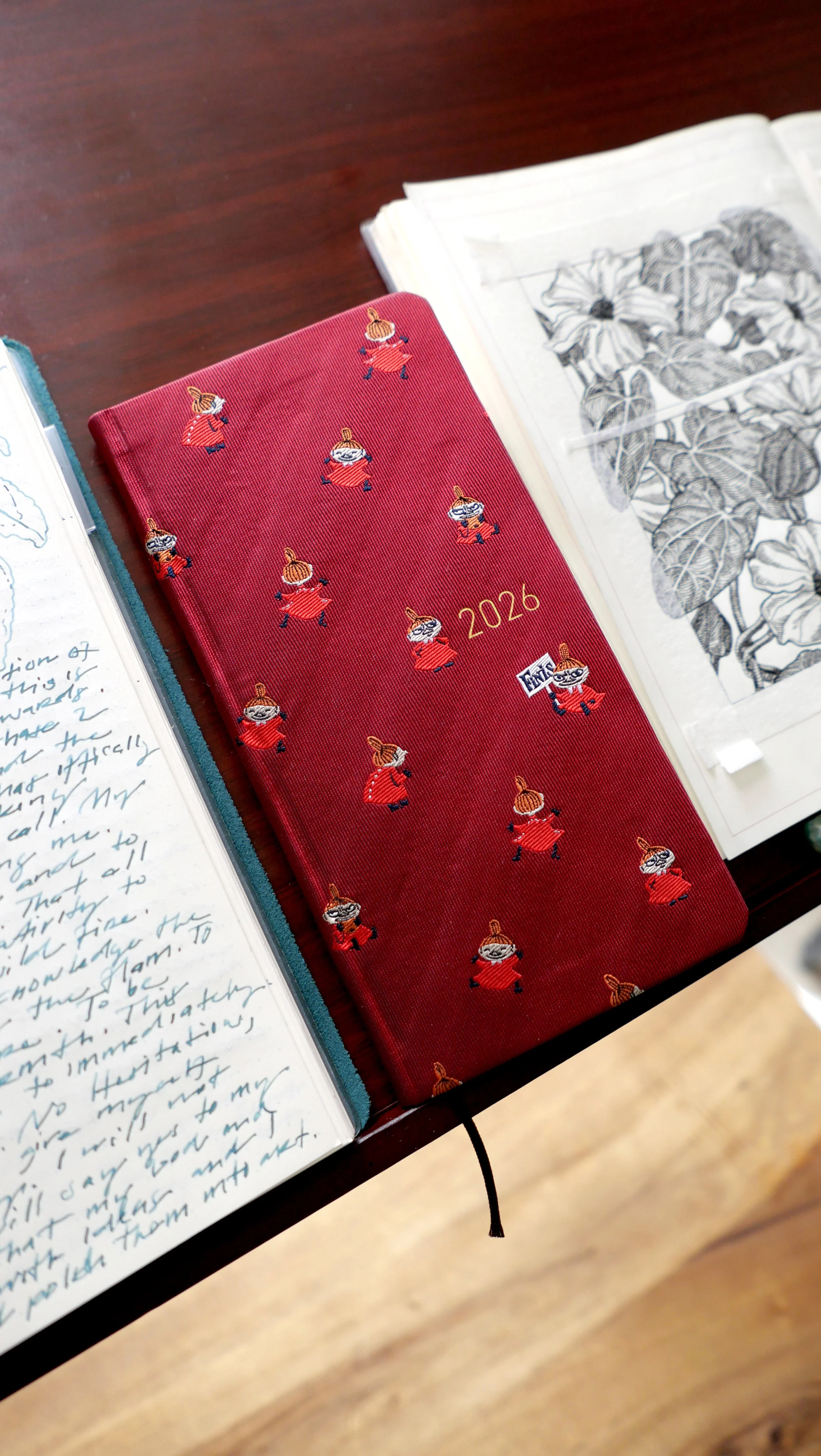
So in 2026, I decided to bring something analog back into my routine with the Hobonichi Weeks. I picked up the Moomin Little My Everywhere! edition [Eng/Jan start] ($27), and it has completely shifted how I think about planning.
First Impressions
The Hobonichi Weeks is slim, lightweight, and easy to carry. It fits perfectly into my journal ecosystem, or I can take it on its own and toss it into my bag without hesitation since I added a clear cover.
Inside, the layout is simple and intuitive. At the front, you get a year-at-a-glance view followed by individual monthly spreads. Each week is then laid out across two pages. In the back, there are extra blank pages, a few unique Hobonichi curated spreads, and a 365-day checklist that you can use however you want. In my Hobonichi Weeks, I:
zoom out and see the week as a whole
write down what actually matters
track priorities instead of just time
reflect on how the week feels, not just how it looks
Using It Alongside a Digital Calendar
What makes the Weeks so flexible is how it balances structure with open space. You can shape it to fit your life instead of forcing your routine into a rigid system. That is exactly why it pairs so well with a digital calendar. Here is how I use mine:
| On the left side, I keep things structured: | On the right side, I treat it more like a creative space: |
|---|---|
| meeting reminders | habit tracking |
| important work tasks | ongoing project lists |
| daily notes | weekly thoughts and ideas |
| deadlines | manifestation zone |
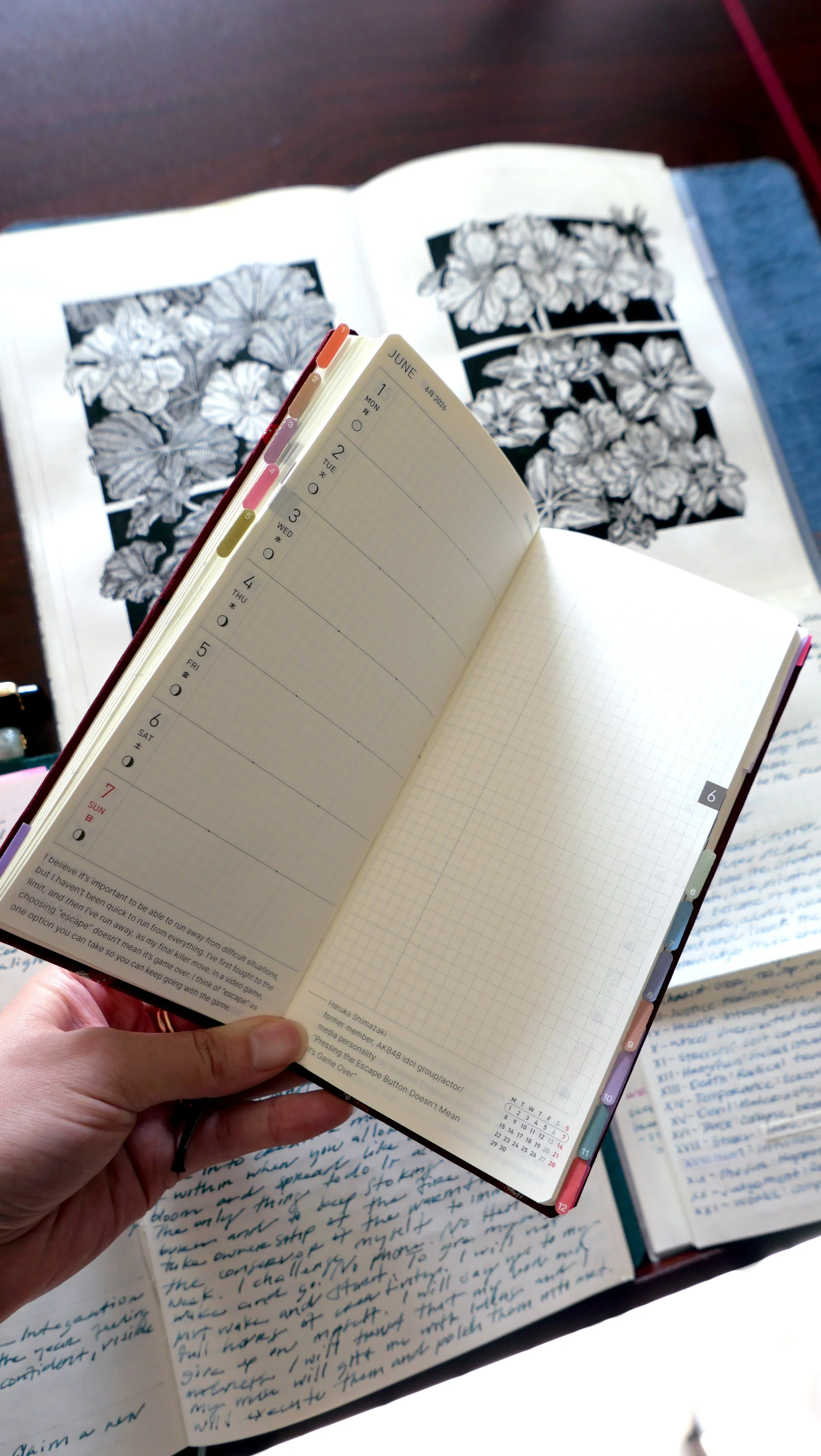
In the back, I created a monthly section where I track meaningful days and write a short recap of how the month felt. It is simple, but it helps me reflect in a way digital tools never really do.
This is where the Weeks really clicks for me. I rely on my digital calendar for anything time specific. Meetings, appointments, and deadlines all live there. I am not copying everything over. I am curating what actually deserves my attention. It shifts my planning perspective and gives everything a place in both worlds.
I finally started using a Hobonichi Weeks. In this video I set it up and share how I am pairing it with my digital calendar for a more intentional way to plan.
Paper That Feels Good to Write On
I love paper, and I am very particular about how it feels. If the paper does not feel right, I will stop using the planner. And if it cannot handle fountain pen ink, it is an immediate no for me.
The Hobonichi Weeks uses Tomoe River paper 52 gsm, which is thinner than typical notebook paper. This allows the planner to stay very slim and lightweight, perfect for carrying around. Despite its thinness, it handles fountain pens, ballpoints, and certain highlighters beautifully, with very little bleed-through. The surface is incredibly smooth, so pens glide across it easily. (The color of your ink does matter, so keep that in mind.)
This year, I picked a specific ink to use throughout the planner: Jacques Herbin 1670 Opale Nocturne. It is a moody teal with subtle gold shimmer, dark enough to read easily with very minimal ghosting. Paired with my Esterbrook Niblet fountain pen in Seaglass with a fine nib, the whole experience is dreamy.
Why It Works for Creatives
Creative work is not always structured. It shifts, evolves, and sometimes feels hard to pin down. That is why I like having something that works alongside more rigid systems like Notion or a data-driven calendar. It gives me space to approach time a little differently, to play with it in a way that feels more natural. Or at least, that is how I think about it.
This year, I also wanted to spend less time on screens and create something that felt more grounded and tactile. For me, that looks like planners, journals, and sketchbooks.
The Weeks gives just enough structure without feeling restrictive, which makes it easier to stay consistent. I like it because:
it leaves room for ideas, not just tasks
it supports both planning and reflection
it feels flexible when my schedule is not
it encourages consistency without pressure
And at the end of the year, you can archive it and add it to a growing collection. Lined on a shelf, they become little time capsules filled with ideas, routines, and moments you would have otherwise forgotten in time
A Slower Way to Plan
Using the Weeks has changed how I think about planning. It is less about filling every space and more about choosing what matters. Writing things down by hand creates a pause that you do not get from typing.
I actually look forward to planning now. It feels like a small ritual instead of a task. I have also started using thin sticky notes for anything that might move around, and small stickers to highlight moments throughout the week. It keeps things flexible but still personal.
Does the Hobonichi Weeks Live Up to the Hype?
There is a reason the Hobonichi Weeks has such a loyal following. It is simple, well designed, and easy to adapt to your own routine. If the Weeks ever feels too small, there are other sizes with more space, but for me, this format works perfectly alongside my digital tools.
For a long time, I thought I had to choose between digital planning and paper planning. My phone still holds my schedule and keeps everything running, but the Hobonichi Weeks changed how I approach my time. It is not about doing more; it is about being more intentional.
In my opinion, the Hobonichi Weeks is a thoughtful planner for creatives trying to find balance in a digital world. Planning no longer feels overwhelming or transactional. It feels personal. It feels creative. It feels like something I actually want to return to each week. That feeling alone, wanting to come back, is one of the biggest factors in real productivity.